
Home » The Convergent Future: Industrial IoT and the Rise of Smart Manufacturing
For centuries, industrial progress was defined by mechanization, a profound shift from manual to machine-driven labor. The contemporary industrial landscape is undergoing a similar, albeit more profound, metamorphosis. It is a pivot from mechanical automation to digital orchestration. This epochal shift, driven by a confluence of advanced computing, connectivity, and data analytics, is fundamentally redefining how products are conceived, manufactured, and delivered to the market.
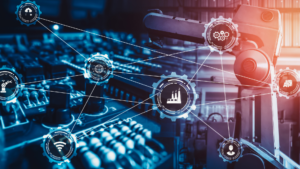
At the very core of this transformation lies the Industrial Internet of Things (IIoT). IIoT is not a mere collection of interconnected devices; it is a pervasive, sensoric fabric that blankets the entire manufacturing continuum. By instrumenting machinery, assets, and even products themselves with a vast array of sensors, manufacturing facilities can now generate an uninterrupted stream of telemetry. This flow of data is the lifeblood of the smart factory, enabling an unprecedented degree of visibility, control, and intelligence.
The foundation of any IIoT architecture is its sensoric fabric. These ubiquitous nodes, embedded within every machine and component, are responsible for the continuous telemetry of operational metrics—temperature, pressure, vibration, and energy consumption. This granular data, previously uncaptured or recorded manually, provides the raw material for advanced analytics. This uninterrupted data flow is the sine qua non of a truly intelligent manufacturing ecosystem
While the cloud provides the computational power for high-level analytics, not all data can or should be transmitted over networks. Edge computing represents a decentralized intelligence echelon where data is processed and analyzed locally, at or near its point of origin. This allows for real-time decision-making, such as automated quality checks or immediate machine adjustments, without the latency inherent in cloud-based processing.
The cloud serves as the nexus for long-term data aggregation and advanced analytics. It is here that vast historical datasets from multiple facilities and production lines are consolidated. Cloud infrastructure provides the scalable computational resources necessary for executing complex machine learning models, which can identify macro-level trends, optimize global supply chains, and inform strategic business decisions.
The application of machine learning and predictive analytics to the aggregated IIoT data is where the true strategic value is realized. These sophisticated algorithms can forecast future outcomes based on historical and real-time data. They move the enterprise from a reactive posture—responding to problems after they occur—to a proactive one, anticipating issues before they manifest.
In a conventional manufacturing setting, maintenance is either reactive or schedule based. The smart factory, however, employs a predictive maintenance paradigm. By analyzing sensor data for minute anomalies and performance deviations, machine learning models can forecast component failures. This allows maintenance to be scheduled precisely when it is needed, minimizing unscheduled downtime and extending the operational lifespan of assets.
Ensuring consistent product quality is paramount. In a smart factory, IIoT-enabled systems and computer vision algorithms act as a digital auditor, continuously inspecting every product on the line. They can identify defects that are imperceptible to the human eye, ensuring that every unit meets the highest standards of quality and compliance. This process significantly reduces waste and the cost of quality assurance.
IoT provides an unparalleled level of transparency throughout the supply chain. By tracking raw materials from their origin and finished products to their final destination, organizations can create a transparent and agile ecosystem. This real-time visibility allows for dynamic route optimization, demand forecasting, and a more resilient response to supply chain disruptions.
The advent of smart manufacturing does not render human labor obsolete. Instead, it augments the workforce. IIoT systems provide operators with real-time performance data, predictive insights, and automated support, enabling them to make more informed decisions. This human-machine collaboration elevates the role of the worker, fostering a culture of continuous improvement and innovation.
By eliminating unscheduled downtime, optimizing production parameters, and automating quality control, smart manufacturing dramatically augments throughput and operational velocity. This translates directly into a higher yield of finished goods and a faster time to market, providing a decisive competitive advantage.
The efficiencies gained through predictive maintenance, reduced waste, and optimized energy consumption collectively lead to a significant attenuation of operational expenditures. By operating more intelligently, organizations can reduce costs across the board, from maintenance and energy to labor and raw materials.
In an era of unprecedented volatility, enterprise resilience is a strategic imperative. The real-time visibility and predictive capabilities of a smart manufacturing system allow an organization to anticipate and respond to disruptions—be they in the supply chain, on the factory floor, or in the market—with agility and speed.
The data and flexibility of a smart manufacturing environment serve as a powerful catalyst for product innovation. Manufacturers can rapidly iterate on designs, produce highly customized products, and adapt their production lines to meet dynamic market demands, moving beyond mass production to a more bespoke, customer-centric model.
A significant barrier to adoption is the integration of new IIoT systems with existing legacy infrastructure. Many manufacturing facilities operate with decades-old machinery and proprietary software. This requires a strategic, phased approach to integration, often leveraging middleware and specialized APIs to bridge the technology gap.
The convergence of the physical and digital worlds in smart manufacturing introduces new cybersecurity risks. The cyber-physical frontier, where operational technology (OT) meets information technology (IT), must be secured with a robust, multi-layered security framework. This requires specialized expertise to protect both the data and the physical machinery from malicious actors.
The skills required to manage a smart factory—data science, IIoT architecture, and cybersecurity—differ significantly from traditional manufacturing skillsets. Organizations must invest in upskilling their existing workforce and strategically recruiting new talent to bridge this disjunction.
The journey to smart manufacturing is not a single leap but a series of measured steps. The most successful implementations begin with a well-defined pilot program, focusing on a specific use case with a clear return on investment. The insights and successes from this initial phase can then be leveraged to build a strategic roadmap for a pervasive, enterprise-wide deployment.