Introduction
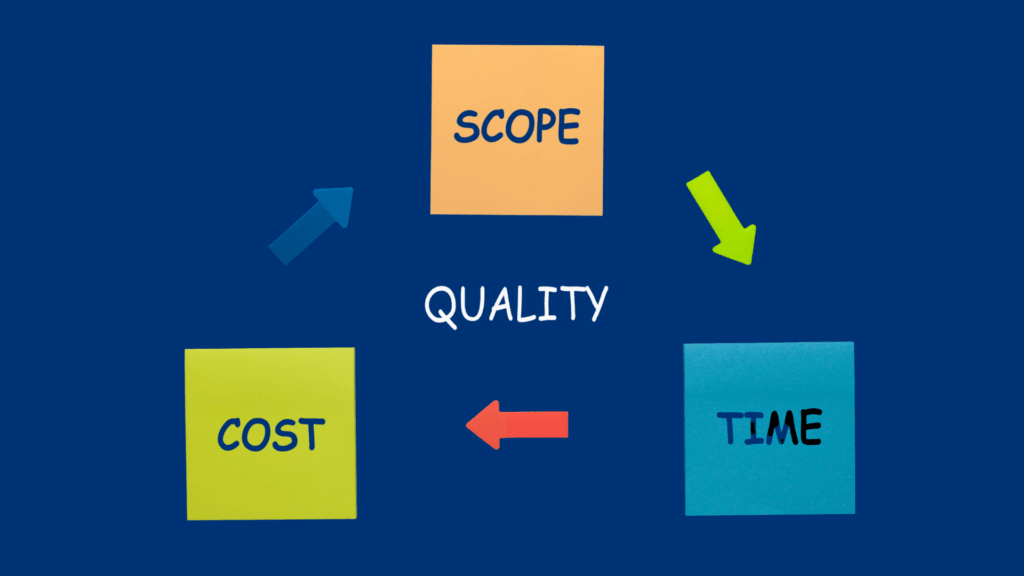
The Project Management Triangle, also known as the triple constraint, remains a foundational paradigm in modern project delivery. This intuitive model portrays the delicate interplay between scope, time, and cost—each vertex exerting pressure on the others. A shift in one invariably necessitates recalibration of the others to preserve project integrity.
Scope: The Dimension of Deliverables
Scope defines what the project must accomplish. It encompasses all the functionalities, features, and outcomes required by stakeholders. Accurately defining and safeguarding scope prevents scope creep—an insidious expansion that erodes timeline and budget, jeopardizing project viability.
Time: Deadlines That Bind
Time refers to the scheduled duration for project completion. It includes all milestones, deadlines, and deliverable checkpoints. Compressing time often necessitates additional resources or reduced scope. Conversely, extended timelines may introduce inefficiencies or escalate costs through prolonged staffing and overhead.
Cost: The Financial Constraint
Cost encapsulates all monetary resources dedicated to the project: labor, materials, infrastructure, and indirect expenditures. Reducing cost can strain timelines or compel scope reduction. Conversely, investing more money may accelerate schedules or extend scope—if managed intelligently.
Interdependence of the Three Elements
These constraints form an equilateral relationship. Enhancing scope—by adding features, complexity, or quality—often increases both time and cost. Accelerating timelines may demand increased staffing or reduced scope. Tight budgets might extend timelines or reduce delivered functionality. The project manager’s role is to maintain equilibrium, ensuring adjustments propagate predictably across all vertices.
Quality: The Triangular Keystone
Though the triangle often excludes quality, it inherently depends on the balance of scope, time, and cost. Deviations—such as compressed timelines or budget cuts—can compromise quality. Thus, quality serves as the keystone that sustains the triangle’s overall stability.
Strategic Levers for Effective Balancing
- Scope Management: Utilize features prioritization tools like MoSCoW (Must, Should, Could, Won’t) to maintain clarity.
- Time Management: Implement techniques like the Critical Path Method (CPM) to govern schedule constraints.
- Cost Management: Apply earned value analysis (EVA) to monitor deviations in real time.Maintaining continuous visibility into all three dimensions enables proactive course correction, ensuring risks remain manageable.
Real-World Illustration
Imagine a healthcare software rollout with a fixed compliance scope. A regulatory change mandates new features. To accommodate, the team must either extend the timeline or increase budget. If neither is feasible, reprioritizing features or phasing the rollout becomes imperative. High-quality results demand this triadic adjustment to maintain equilibrium.
Conclusion
The Project Management Triangle encapsulates the tension between scope, time, and cost in every initiative. Masterful project leadership lies in balancing these constraints while preserving quality. By embracing this model—not as a restrictive envelope, but as a strategic matrix—organizations can deliver consistently, sustainably, and with precision.