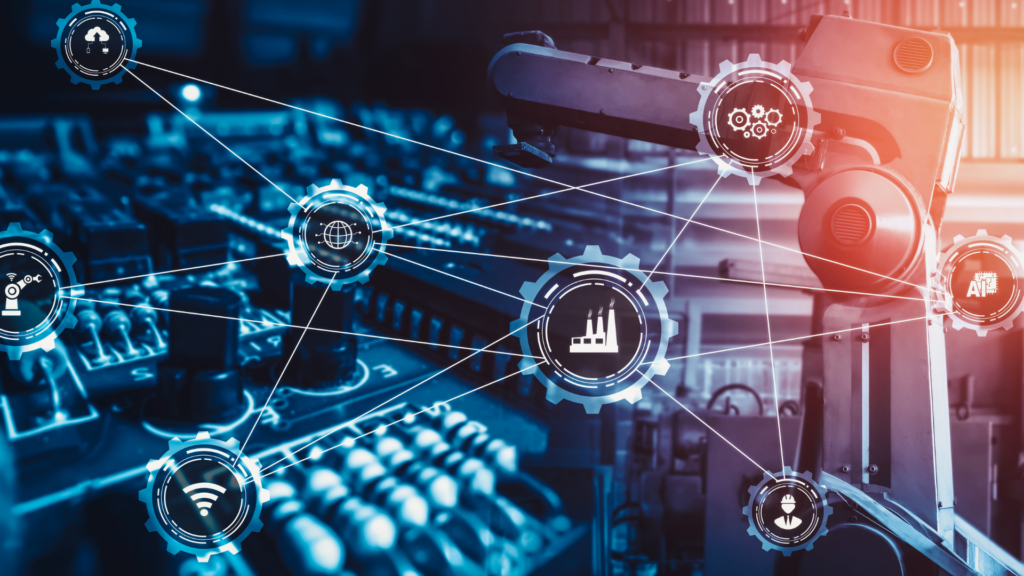
The manufacturing sector stands at the precipice of a transformative era, propelled by the principles and technologies of Industry 4.0. This paradigm shift integrates digital technologies into manufacturing processes, creating interconnected, intelligent systems that enhance efficiency, flexibility, and innovation. The factory of the future is not a distant concept but a present reality, with organizations worldwide adopting these advancements to redefine production landscapes.
1. The Pillars of Industry 4.0
Industry 4.0 is characterized by the convergence of several key technologies:
Internet of Things (IoT)
Sensors and devices embedded in machinery collect real-time data, enabling continuous monitoring and control of production processes.
Artificial Intelligence (AI) and Machine Learning
Algorithms analyze vast datasets to optimize operations, predict maintenance needs, and enhance decision-making.
Digital Twins
Virtual replicas of physical assets simulate real-world conditions, allowing for testing and optimization without disrupting actual operations.
Robotics and Automation:
Advanced robots perform complex tasks with precision, improving speed and consistency while reducing human error.
Cloud Computing
Centralized data storage and processing facilitate seamless access to information across the enterprise, promoting collaboration and agility.
Cyber-Physical Systems
Integrated systems that link physical processes with digital controls, enabling real-time feedback and adaptive responses.
These technologies collectively form the backbone of smart manufacturing, driving the evolution of factories into intelligent, self-optimizing entities.
2. Transformative Impacts on Manufacturing Operations
The adoption of Industry 4.0 technologies brings about profound changes in manufacturing operations: